
How to Know If a Tree Is Dangerous Before It Falls: 10 Warning Signs Bronx Homeowners Should Never Ignore
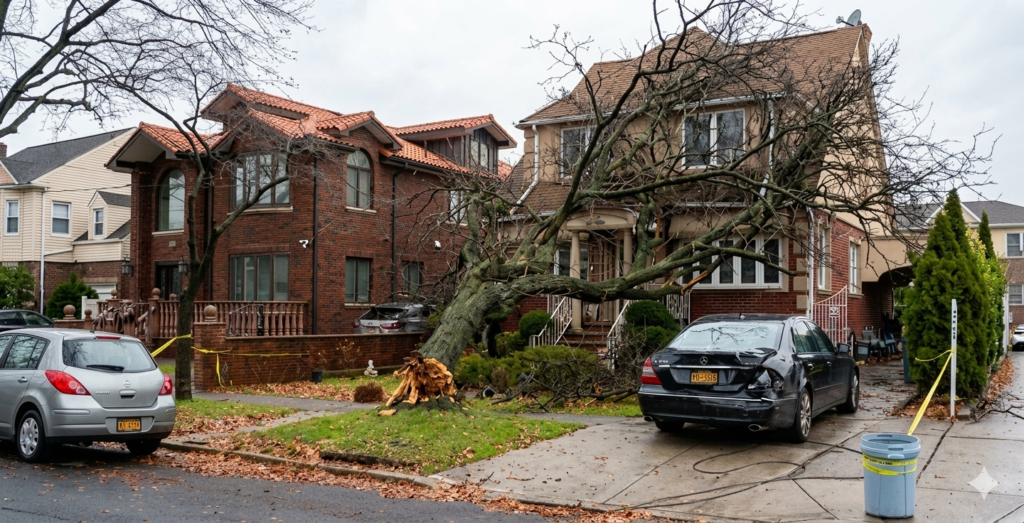
Standard tree removal typically costs between $200 and $2,000, but wait until a dangerous tree actually fails and that number can climb past $5,000 once structural damage, emergency crews, and after-hours rates enter the picture. Almost always those two numbers are the same thing: time. Trees do not normally die suddenly. Most emit obvious physical symptoms weeks or even months before they fall, but only if you can recognize what to look for. Recognizing these tree warning signs early is the difference between a scheduled and affordable pruning, and an emergency call in the middle of a storm for Bronx homeowners. Here are the 10 warning signs that mean a tree needs professional attention now, not later. 1. A Lean That’s New or Increasing Some natural lean in every tree is normal and a slight lean that has been there for years is probably of no consequence. It is the lean that is new, or that seems to have worsened in a relatively short time, particularly after a storm in the Bronx that has heavy rain or wind common at that time of year. A tree’s anchorage in the soil has begun to loosen when it tilts suddenly. This is one of the most pressing signs on this list as a changing root plate can completely break down with minimal further warning. 2. Cracks or Splits in the Trunk Vertical trunk cracks are a direct indicator that a tree’s structural core has been compromised. They may be caused by the stress of storms, internal decay, or merely old age, and may be deeper than they look on the exterior. If a crack opens up again after a wind event or if it extends for a large part of the trunk, it means the tree may split completely under the next heavy wind, and is a frequent source of emergency calls in Bronx neighborhoods following seasonal storms. 3. Dead Branches in the Canopy Often referred to as widowmakers, dead branches are hazardous because they can snap for no apparent reason, even on a calm day. After a branch has died, the binding fibers which attach it to the tree weaken and eventually it will fall. When the tree poses a hazard, has a significant amount of deadwood in the upper canopy, and may be located over a driveway, walkway or roof line, the tree should be assessed promptly such as on Bronx property where mature limbs are often over driveways, walkways or rooflines. 4. Mushrooms or Fungal Growth on the Trunk or Roots Fungal conks on or near a tree usually mean trouble. These fruiting bodies are the manifestation of internal decay which has been going on for a long time, usually under the bark, and usually in the roots or lower trunk where wood-decay fungi tend to be first established. One of the more obvious tree signs Bronx homeowners can use to identify without professional tools is by the time the mushroom is visible, there has already been much more damage to the tree than is apparent at the surface. 5. Hollow Sections or Visible Cavities A hollow trunk does not necessarily indicate an unsafe tree, but does indicate missing structural wood. The point is, how much solid wood is there to support the tree’s load and canopy? Hard to accurately assess without training, hence the importance of cavity assessment by a certified arborist who can say if there is enough shell left or if the cavity has gone beyond a safe limit. 6. Heaving or Cracked Soil Near the Base One of the first and least noticed warning signs occurs on the ground not in the canopy. A mound, crack or lifted area of the earth around the root flare is referred to as soil heaving, and is a sign that the root plate is starting to move below ground. This sign frequently shows up prior to any visible lean above ground, and is one of the more valuable items to inspect on Bronx trees following a storm, when the tree may still be stable. 7. Weak Branch Unions With Included Bark If two large branches are entering the trunk, they should not be connected in a sharp angle. When the bark instead, grows inward between them, it’s called included bark, and it results in a structurally weak place where the limbs never truly join. These unions tend to break apart under wind load, heavy snow or ice accumulation and often do so quite suddenly without much apparent prior warning, which makes this one of the most difficult tree warning signs to detect without a trained eye. 8. A Thinning or Discolored Canopy The crown of a healthy tree should be full and of the right size for the species and age. The first indication that something is wrong with the tree is when the canopy begins to thin out before expected or when leaves are smaller, lack color or fall prematurely. This may indicate root problems, disease or poor vascular health as well as reduced structural strength (wind and storm damage resistance) indicative of reduced tree vigor. 9. Peeling or Missing Bark Bark is the tree’s protection, and extensive peeling or loss of bark can leave the wood vulnerable to pests, water and decay organisms. This differs from the normal shedding of bark on certain species. Concerning bark is that which has been obviously damaged by a storm, mechanical injury or disease process and the wound does not appear to be healed over. Exposure for long periods at these wound sites is often where decay begins and is worthy of documentation on any Bronx property that has mature, older trees. 10. Proximity to Structures Combined With Any of the Above A tree that is displaying one or two minor warning signs that is located in an open lot poses a very different risk profile than the same tree located a few feet from a Bronx home, garage or driveway. Proximity multiplies risk rather than simply adding to