Not every damaged tree needs to be removed. In many cases, trees with weak branches or structural defects can be preserved through professional cabling and bracing. These support systems strengthen vulnerable trees, reduce the risk of branch failure, and help extend the life of valuable mature trees. For homeowners who want to preserve healthy trees while improving safety, cabling and bracing can be an effective long-term solution.
What Is Tree Cabling?
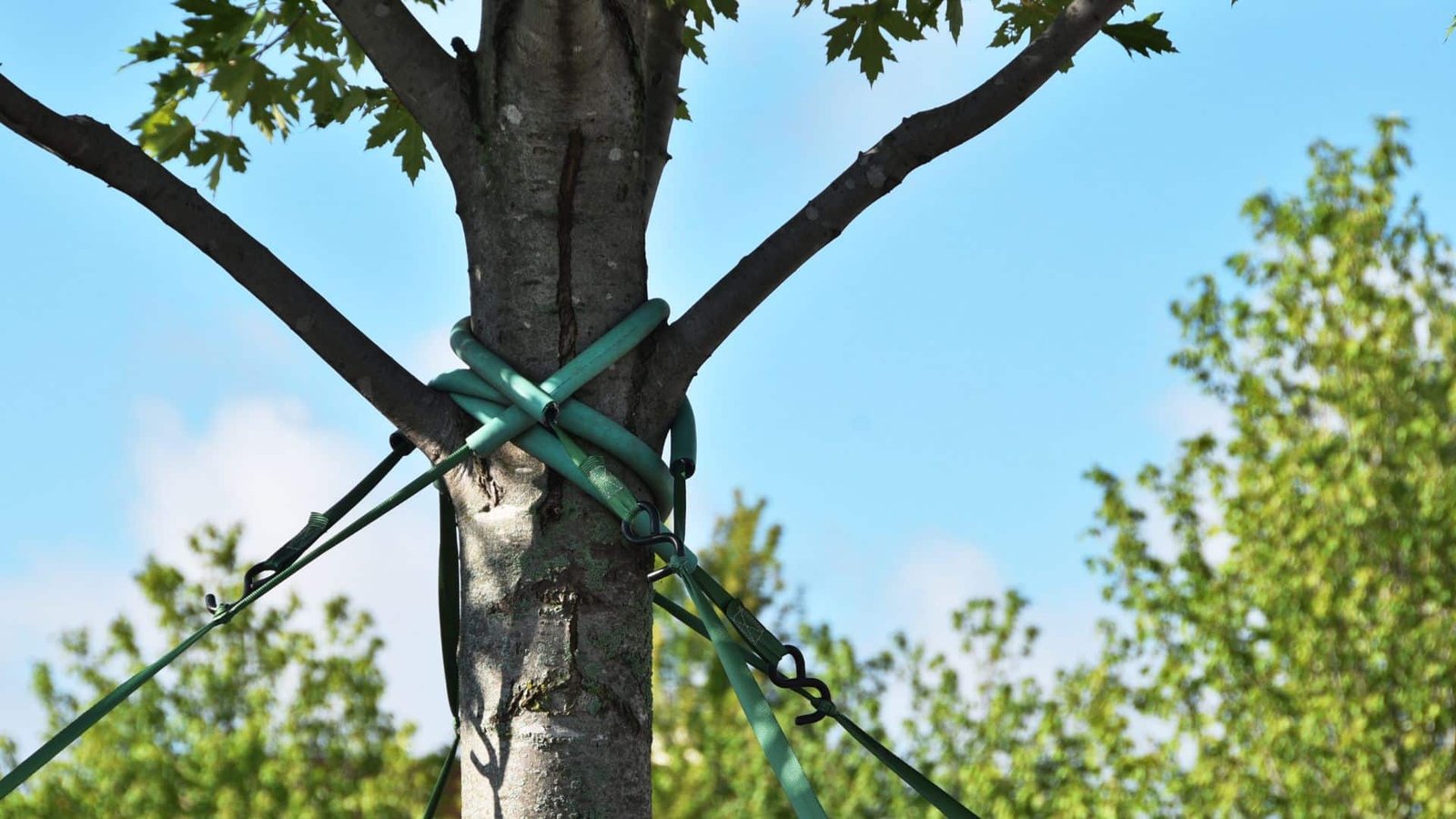
Tree cabling involves installing high-strength steel cables between major branches or stems to provide additional support. The cables help distribute the tree’s weight more evenly and reduce stress on weak limbs during high winds or heavy snow.
Cabling is commonly recommended for mature trees with multiple trunks or heavy, overextended branches.
What Is Tree Bracing?
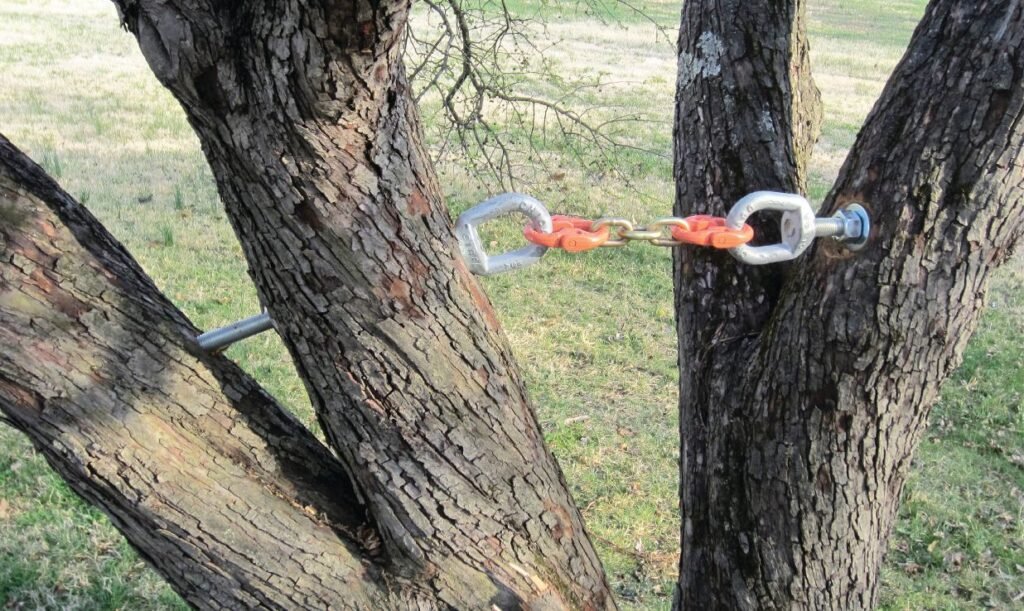
Tree bracing uses threaded steel rods that are installed through weak branch unions or split trunks. These rods provide permanent structural support and help stabilize areas that have been weakened by cracks or storm damage.
Bracing is often used together with cabling to strengthen trees with significant structural concerns.
When Is Cabling or Bracing Needed?
Professional tree care specialists may recommend support systems if a tree has:
- Multiple trunks with weak attachments
- Large overextended limbs
- Storm-related damage
- Visible trunk splits
- Heavy branches growing over buildings or walkways
- Historic or valuable mature trees worth preserving
Every tree should be evaluated individually before deciding on the appropriate treatment.
Benefits of Cabling and Bracing
Properly installed support systems offer several advantages:
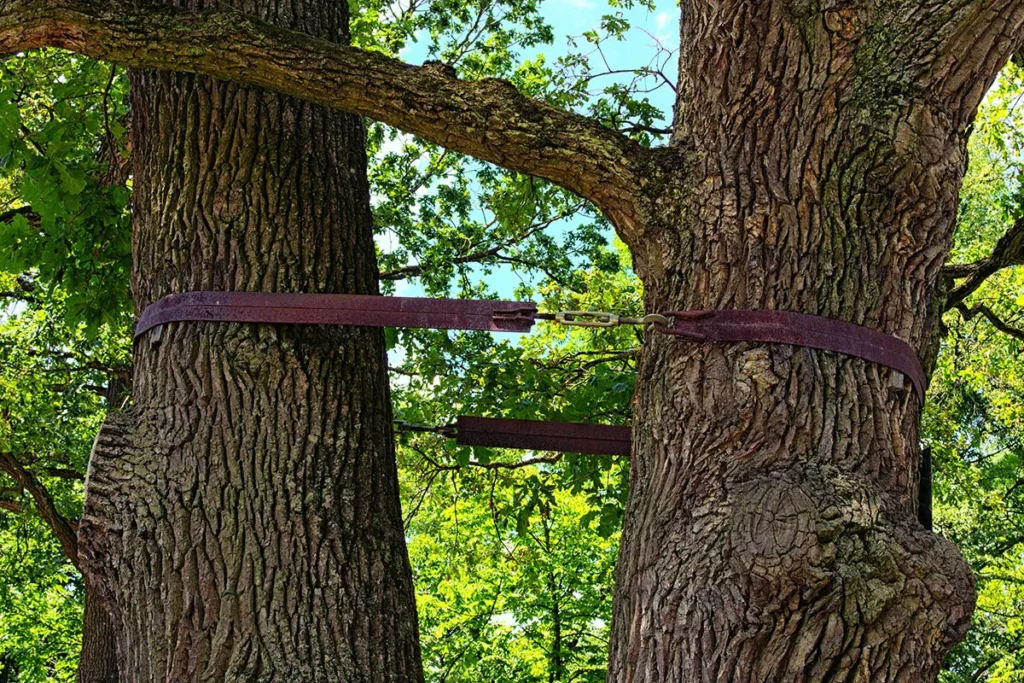
- Reduce the risk of branch failure
- Improve tree stability
- Protect nearby homes and vehicles
- Extend the lifespan of mature trees
- Preserve valuable landscape features
- Reduce the likelihood of emergency tree removal
These systems allow many trees to remain healthy while improving overall safety.
Regular Inspections Are Still Important
Cables and braces are not permanent solutions that can be ignored after installation. Trees continue to grow, and support systems should be inspected periodically to ensure they remain effective.
Routine evaluations allow professionals to adjust or replace hardware when necessary while monitoring the tree’s overall health.
Combine Support with Proper Tree Care
Cabling and bracing work best when combined with other maintenance practices, including:
- Professional pruning
- Disease management
- Routine tree inspections
- Soil improvement
- Storm damage assessments
Together, these services help maintain a healthier and stronger tree for many years.
Why Professional Installation Matters
Installing cables or braces requires specialized knowledge of tree biology and structural support. Incorrect installation can weaken the tree instead of strengthening it.
Experienced tree care professionals determine the proper placement of support systems while minimizing stress on the tree and preserving its natural growth.
When Tree Removal Is Still Necessary
Although cabling and bracing can save many trees, they are not suitable for every situation. Trees that are completely dead, severely decayed, or structurally unstable may still require removal to protect nearby people and property.
A professional inspection is the best way to determine whether preservation or removal is the safest option.
Conclusion
Tree cabling and bracing provide an excellent alternative to removal for many structurally weakened trees. By reinforcing vulnerable branches and trunks, these support systems improve safety while allowing valuable trees to continue growing. Combined with regular inspections and professional maintenance, cabling and bracing can help homeowners preserve the beauty and benefits of mature trees for many years to come.